
Strategy is the wrong first step
The unconventional way to claim our confidence

TL;DR: The secret to standing out is not a better strategy. It’s confidence — but not the kind built on future promises. This piece explores why methods and steps are the wrong approach in a hyper-competitive world, and offers two simple questions that can help you refocus on what you already have today.
Have you seen that everywhere online, we are relentlessly telling others what to do?
If you have more followers than others, you can say how to get more followers. If you went through a difficult experience, you can say how to get through it. If you know how to do something and it sells, you tell others how to launch a new product.
You get the point.
Nothing wrong with sharing, nothing wrong with making money out of our experience. Of course not.
But aren’t we forgetting something?
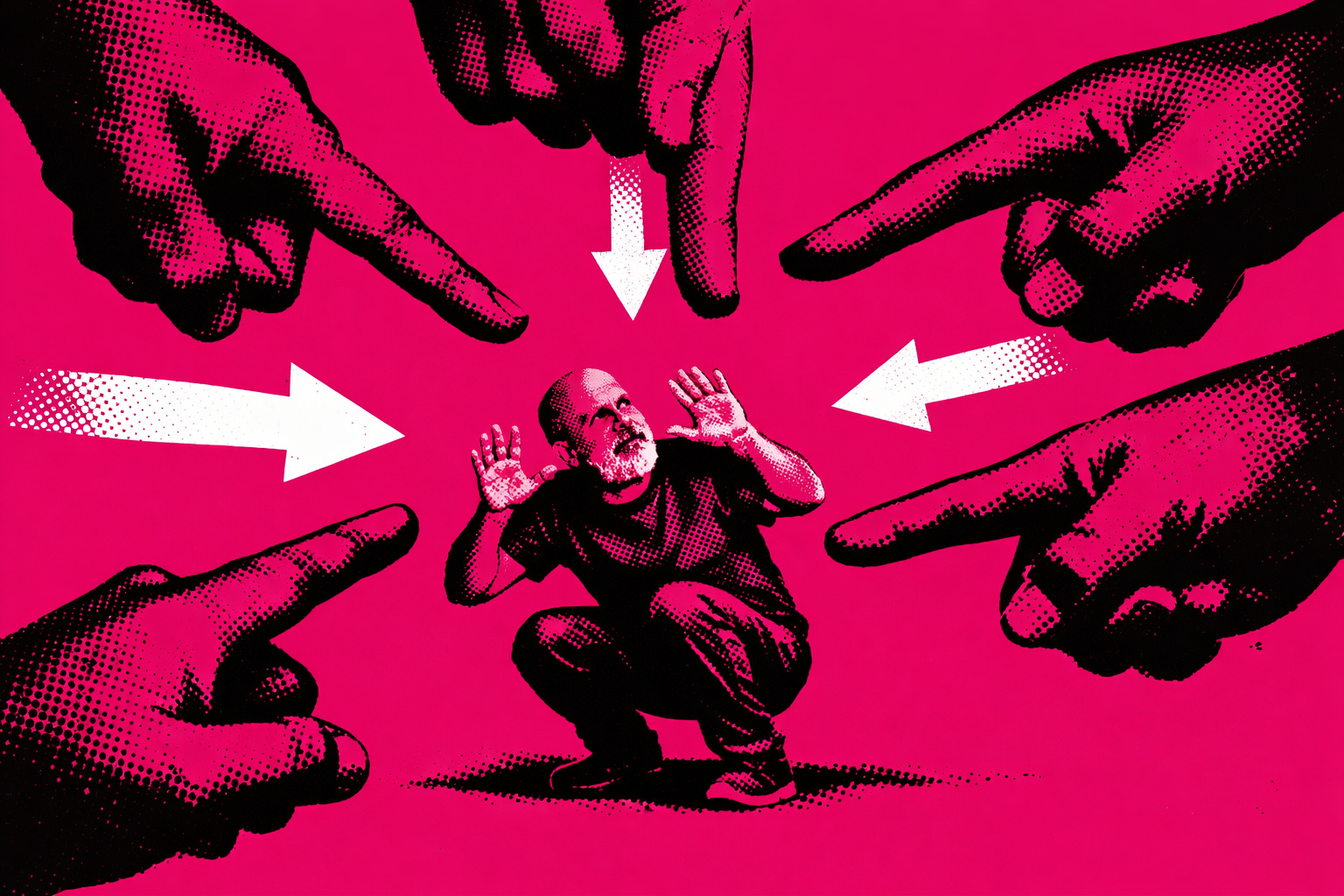
Today, in a conversation with two close friends, reflecting on our week, it became obvious that our minds swing from a strategic perspective to a philosophical one. The three of us agree on everything, fundamentally. But we differ in our approaches and starting points.
Many of our conversations focus on solving the issues we have in front of us: how to get the new customer, how to minimize risk, and how to have more free time. Yes, you are right if you think these three guys are actually overthinking (internal joke).
But today, in contrast with other Sundays, I have a clear idea of what worked for me this week. I will share it with you, and I know it will sound weird.
Do you know Casey Neistat?
He is known as a YouTube personality, but I think he is so much more than that. Many people have interviewed him, analyzed his style and methods. Many have imitated him as well, but none that I know of managed, after so much scrutiny, to match Casey’s success.
Isn’t that a clue?
We are collectively obsessed with following instructions — school, perhaps? We want to believe there is a formula to achieve, because that’s what we see and hear all the time. More than that, it’s what most of us do as well: tell others what to do.
But Casey, like many other extraordinary people, did the opposite. He found confidence in his uniqueness.
He didn’t find confidence in the results of his actions. Casey started cleaning dishes at a restaurant; the results of those actions alone would hardly point towards success as a YouTuber. He had to do what was needed at the moment. He had to deal with his circumstances.
Thankfully for him, becoming a father and living in a trailer park before he was 20 pushed him to know who he is, what he has, and develop what he is good at.
And that brings us to two questions I’d like you to sit with.
Can you answer these?
What are you good at?
What do you have — material or not — that can be useful to others?
Please, pause, grab a piece of paper, and try to answer.
But wait — being good at something is not being extraordinary, nor better than others. Just good. And having something useful to others can be as simple as having health and time, strength and availability. Or it can mean owning a tractor or having a driver’s license.
I believe Casey knew the answers to these questions. Those were the foundation for his confidence.
What most of us do differently is base our confidence on strategy, tactics, and determination to achieve in the future. Because we are educated to trust in the power of our minds, we use them to develop plans for success built on the knowledge and experiences of others, under entirely different circumstances.
How can we be confident about what we can do now if we keep looking to the future as the place where we’ll finally get the results we work for?
Do you see it?
We present a strategy, prove our commitment, validate our past, and expect others to buy in.
Maybe it worked better before, when there were fewer of us doing it.
How can we be genuinely confident about something we are not in control of?
But Casey grew — step by step in business, mastery, and personal development — the same way a tree grows: daily, adjusting to its circumstances.
Why is that weird? Based on my experience, when we are confident enough to claim who we are, what we are good at, and what we have that can be valuable to others, we capture the attention of everyone around us.
Everyone can see and find inspiration in the unconditional nature of that confidence.
And most importantly, the confident mindset is different. It focuses on what is available now, instead of trying to cover insecurities with strategy.
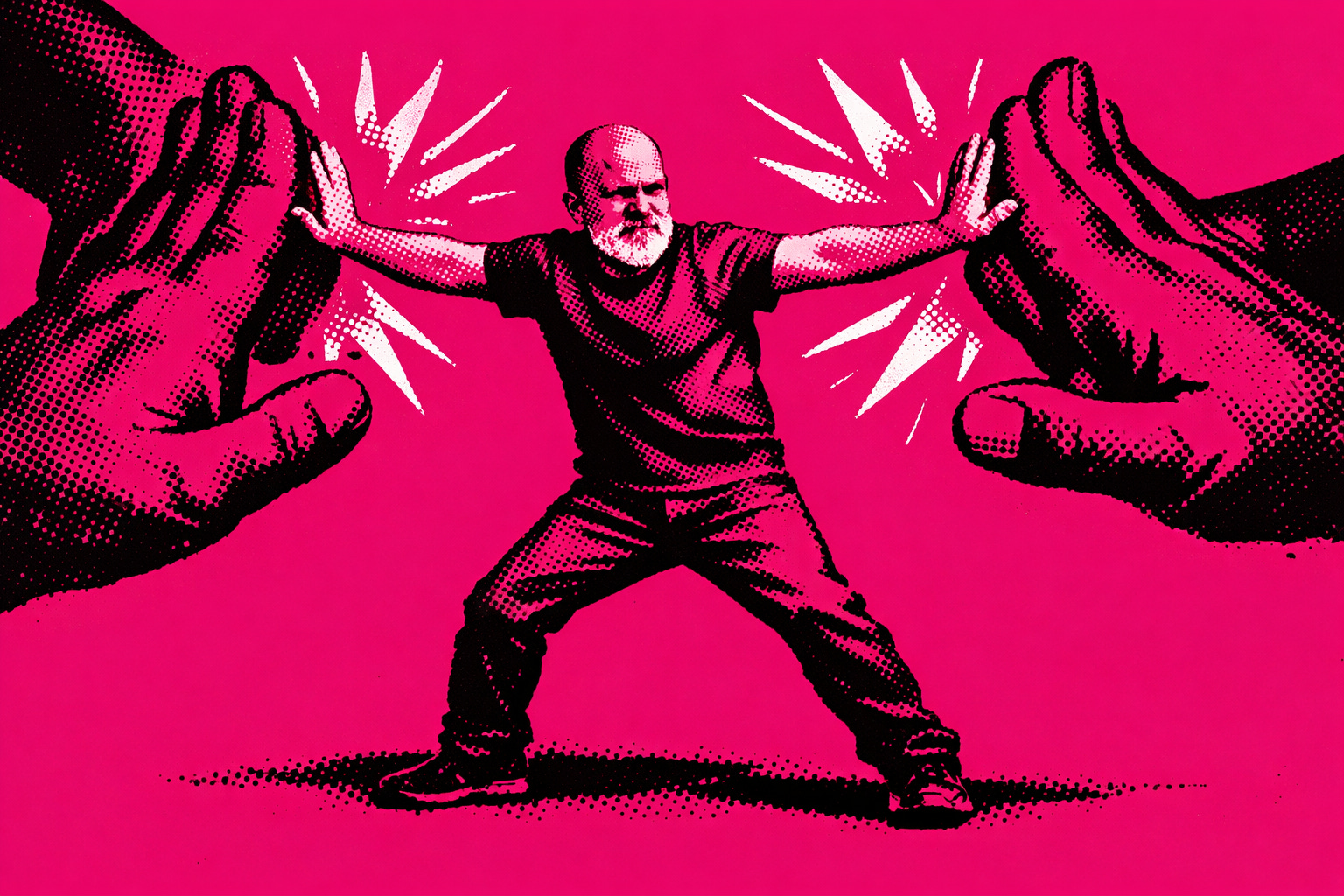
This touches on the philosophical and even the spiritual. If I say: be true to yourself in the present moment, or the universe is a reflection of your true self, you might think I’ve gone woo-woo.
And you might have more questions than answers:
How do I start if I don’t know what I’m good at?
How can I be confident if I think I’m not good enough?
How can I focus on who I am today if that is precisely what makes me feel unconfident?
If you hold those questions without answers, you will not know what to do, why to feel grateful, or how to feel satisfied with yourself. How do you think you see the world from that place? And how do others perceive you? Probably not very confident. Unclear.
But if you have answers to those questions, your energy is different, more positive, assertive, and grounded.
As soon as I publicly stated that I won’t follow the norm, that I refuse to pass through the filters our society has built, I started receiving interesting opportunities. Coincidence? Sure. But the difference is that I was ready to read the signals and act on them, because I feel open, authentic, and unrestrained. I no longer have to comply with rules that push me out of myself.
The solutions to most of our insecurities are available right now, for each one of us.
The way to look at what others say, do, recommend, and advise is through the lens of one question: What is the story behind?
Take Casey. You could spend years studying his editing techniques, his camera angles, and his posting frequency. And you would miss the point entirely. What made Casey is not the craft — it’s the trailer park, the young fatherhood, the dish-washing. The difficult soil that forced him to know himself before he had any results to show. That context is where the real lesson lives.
The wrong question is: what is the method, the tricks, the steps they followed to succeed?
The right question is: what did they go through that made them who they are?
We don’t need to fake it until we make it. We just need to be clear about what we want and what we can give.
Love,
Jose.
The un-strategy: being you.
What landed most for me was the shift from “What’s the method?” to “What did they go through that made them who they are?” It’s a subtle question change that completely rewires how we look at role models and our own path. Casey’s story as you tell it feels less like a blueprint to copy and more like permission to treat our own messy context as the real raw material.