
The Life Purpose Week
Find your Life Purpose, restore balance, and recharge your batteries

To me, the solution to early-stage burnout is understanding Purpose.
The concept of purpose I have has been developed over many years of trying to build connections between ideas like Vision, Mission, Planning, and even Simon Sinek’s Find Your Why.
Do you know what your life Purpose is?
I did formulate mine, and it supported me so much. Because of it, I can detect when I’m spending more energy than I receive. It also helps me recharge, and I learned the difference between rest and entertainment.
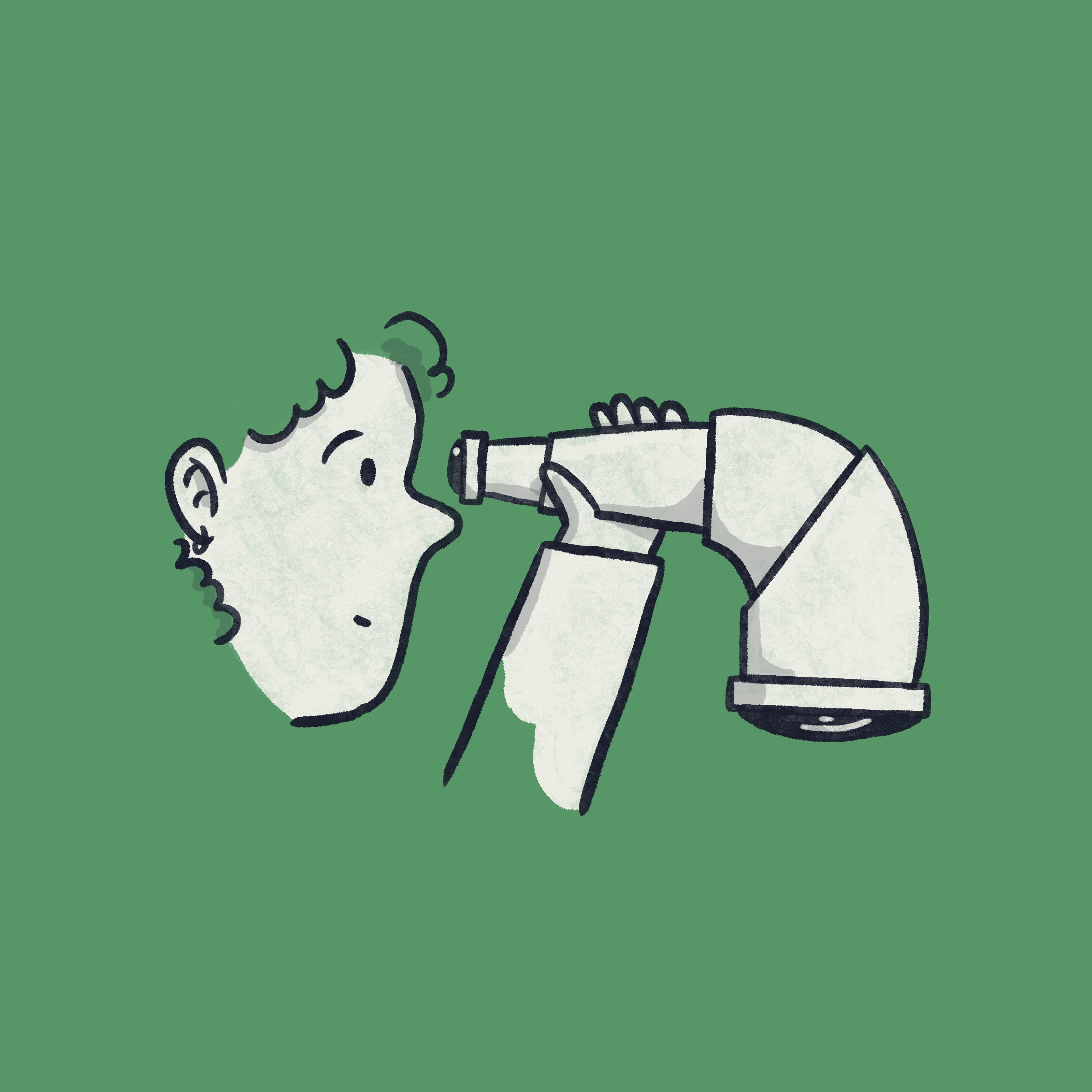
If this topic stirs questions in you—as it should—feel free to send them anonymously using this form. My responses will appear in Friday’s post.
Join or upgrade to the Lincoln Island premium subscription to dive deeper and monitor your progress.
Flow & Purpose
“When people are in their Element, they connect with something fundamental to their sense of identity, purpose, and well-being.” - Sir Ken Robinson
Yesterday I made this little video for you. I hope you enjoy it.
I believe the biggest clue to our Life Purpose is hidden in the activities that make us feel in flow, in the zone, or, as Sir Ken Robinson would say, in our element.
Once we start recognizing what brings us into flow, purpose stops being a mystery. It becomes a daily practice.

Purpose & Planning
When someone asks you, What is the purpose of your work? We usually respond with the outcome of our work—the problem we’re trying to solve, or the vision we’re starting to build.
We rarely answer that question with a phrase in the present tense. Our education keeps us focused on the future, as if the achievements of today don’t matter that much.
Envisioning the future and planning how we can achieve our goals is what we, humans, do. There’s nothing wrong with that—unless our attention becomes so fixated on the future that we grow unable to appreciate what we are doing.
Let’s put it this way: planning and envisioning are essential parts of the creative process. But the creative process is happening now, and we must find joy in it.
It’s now that we course-correct, that we find mistakes, that we align and collaborate.
And it’s in this very moment that we sense when something is off.
A practical sample
My personal Purpose statement is:
Share what I learn as I walk my path.
And that is why I founded two Coworking spaces, organized so many events for people to share their stories, and that is the reason why I’m here in Substack. All that required planning and envisioning, they helped me generate momentum, energize, and inspire me to take action.
When my fears and the circumstances dominate my mindscape, I usually focus on the future, calculate what can go wrong, project my current activities, and build worst-case scenarios. I feel anxious, and that lets me remember: Are my actions aligned with my purpose?
If the answer is no, I know what to do. Any step towards my purpose deflates the momentum of my mind's anxiety.
I usually call a friend and share what I’m going through, what I’m finding out, and what I’m learning.
“We have to recognize that human flourishing is not a mechanical process; it’s an organic process. And you cannot predict the outcome of human development. All you can do, like a farmer, is create the conditions under which they will begin to flourish.” — Sir Ken Robinson
I believe that our mental and emotional state behaves like a rolling snowball.
If we keep our attention on it, it gains momentum, grows, and with every passing second, it becomes harder to stop. Our thoughts and fears add to that momentum, and if we don’t know how to interrupt the process, we may end up anxious, depressed, exhausted, and eventually burned out.
Our Purpose helps us interrupt that process—it slows the momentum. Purpose helps us pause, reflect, and then create action. It redirects the overconsumption of mental energy into practical, meaningful steps.
“When you find yourself in a hole, stop diggin’.” — Cowboy Wisdom
We spend our energy when we think, when we focus, when our thoughts become the only thing we perceive.
We spend our energy when we play a game or watch a movie—both are ways to entertain and distract the mind.
But most of what I described above are not ways to recharge our batteries, nor true ways to rest.
Physical exercise, contact with nature, meeting people, and learning to calm the thinking mind are efficient ways to spend biological energy while producing the conditions for good sleep and deep rest. They decrease the momentum of the thinking mind, liberating us from exaggerated or unnecessary thought.
Resting well also helps regulate our emotional energy.
How does it feel to act on Purpose?
It feels peaceful.
The things you do give you energy. Ideas come easily, and action follows naturally. It feels like being ready — not waiting for permission or the right moment.
“Disturbances in the force” don’t last long; in other words, we handle our emotions with greater ease.
Purpose feels like something you can act upon today — as you are, with what you already have.
It’s not about what you might gain later, nor about winning a competition.
When we act on purpose, we avoid excesses. It becomes a GPS that keeps us balanced and satisfied.
Of course, life can still hit us hard and pull us off track. But once you’ve found your life purpose, it’s easier to return to your element — to the state where you feel aligned, grounded, and alive.
Don’t forget, you can anonymously share questions on the matter, and my answers will be published in Friday’s post.
Love,
Jose
How to find your Purpose?
The main thing is to start reflecting on the evidence you’ve already accumulated. Revisiting memories can reveal a lot.
Let me share with you more options, so you end up this week with a Purpose statement ready:
During the week, I will be sharing more content via our Chat. Feel free to reach out at any moment.
Best
Jose.