
Deflating Limiting Beliefs
The easiest method I found so far

I can’t believe it, but it is true! Pun intended :)
As you probably know, I wrote a book about deconstructing the patterns of fear. In it, I basically show a method to see fear patterns, like not being good enough or being a people pleaser, and discover that they do not protect us from anything anymore; they actually limit us.
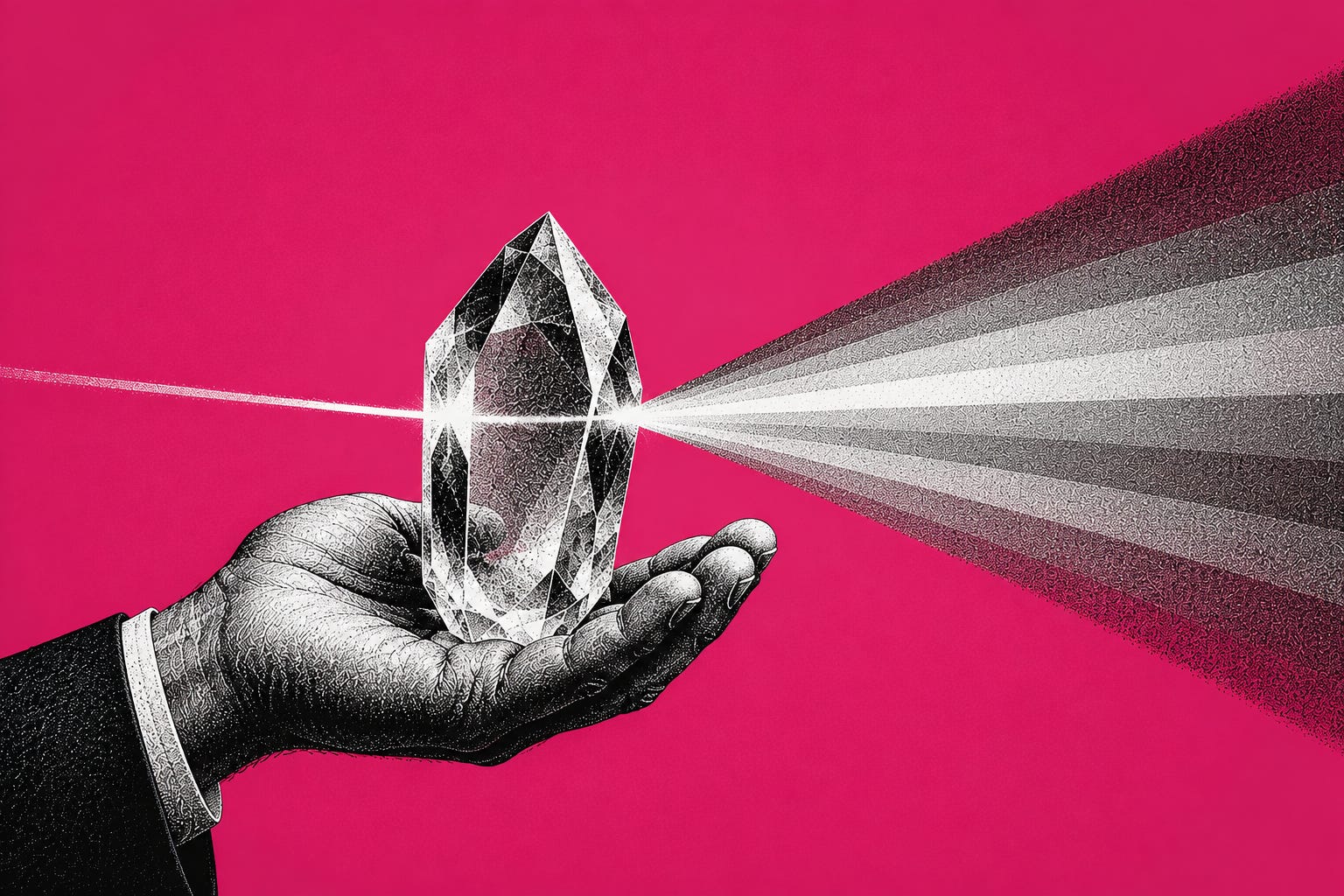
But I have found a new side of the prism; from there I can see that some beliefs can also be dysfunctional and would need deconstruction to be free from their limiting powers.
But what has me even more excited is that I found an easier way to deconstruct, or deflate beliefs that no longer serve us.
A list of beliefs that limit me.
Before explaining the new method to you, I think it is important to show you some real cases of dysfunctional beliefs I’m “deflating” from my life.
I’m not lucky. This belief affects many decisions; it is not only about the lottery, but also about how I engage with risk-taking.
I’m a good rational thinker. When I face a decision, I enter into rational mode; it helps, but sometimes it doesn’t let me see my own biases; it bypasses my intuition and transforms my conclusions into law.
There is something blocking money. My most successful initiative is Aurora Coworking, where I’ve been volunteering my time for 13 years. When I enter into a new venture, I push very hard to succeed even without money. Sounds good, but it is challenging: if I do not present my ventures as businesses, they do not produce money consistently.
As you can see, these beliefs complement each other; they feed one another.
Just reading these three... I can now see my life with so much more clarity…
Now I get it!
The Method.
As I suggested in my previous article, Memory Archaeologist, we experience perceptions, emotions, and thoughts that emerge in relationship with what is happening now. If an opportunity presents itself, I might pass it through the “I’m not lucky” belief and screw it up, for example.
I also suggested that all these perceptions, emotions, memories, and even beliefs present themselves in our mind space... they are different types of thoughts; they produce more thoughts, emotions, and so on.
But they are not us.
They come and go; we witness them, as we do when a rainbow appears. But when the rainbow fades, we do not feel like we lost something of ourselves.
In contrast, when it is about beliefs, we hold on to them, we identify with them, they become part of who we think we are.
If my beliefs are like thoughts, they come and go; they happen. I experience them. Then they are not me.
So what happens if I see my beliefs as complex thoughts and psychological patterns that I confuse with myself?
Instead of giving you a list of steps you should follow, I will present you with the methodology as it happened to me.
Today I had to go to my orchard to pick up aronia berries; we are in a rush to pick as much as possible and send them to the press. My second session started from home at 3 pm, driving to the orchard, and I got caught in rush hour. In Slovenia, many people end their 8 hours at 3 pm. The roads were packed, and the gas station was packed. I started picking, enjoying, and before I finished my basket, a storm showed up from nowhere, and the rain started pouring. I thought: I’m so unlucky.
Wait, what? I said to myself.
Do I really believe that I am unlucky? And that’s when I found the belief lurking in so many of my activities and experiences. Every time something unexpected happens, it validates the belief; it gets bigger. And it overrides any accounting of the good luck that I have very often.
But then, I thought, if this is just a belief, a kind of thought that I’m holding on to as true, and I know that thoughts are not “me,” how come I concluded I’m an unlucky person?
I could see that the belief comes from a complex recipe of fears and insecurities, other beliefs, and thoughts about me. All of them only real in my head.
Seeing that made me feel so free, and it also helped me see that I’m lucky many times. I’m sure that the belief pattern will not disappear completely; I had it for decades.
If you’d like to talk about it, feel free to join the Chat

I wish you an easy day,
Jose.
The prism image works really well here, because the thing itself does not change, only the light you catch it in. Which belief was the one that first tipped you off?
Deconstructing a belief mid-storm while picking berries is a great way to catch it live.