
Who Created Your Options?
The epiphany of seeing the frame — what the Matrix and the Gnostics say about us

TL;DR
From the Gnostics to Cambridge Analytica, the mechanism is the same: shape the environment, let the automatic reactions do the rest.
Everyone knows that seeing a situation from the outside is different from seeing it from within. When a friend describes a problem, the answer often seems obvious to us. But they can’t see it. We’ve been there too.
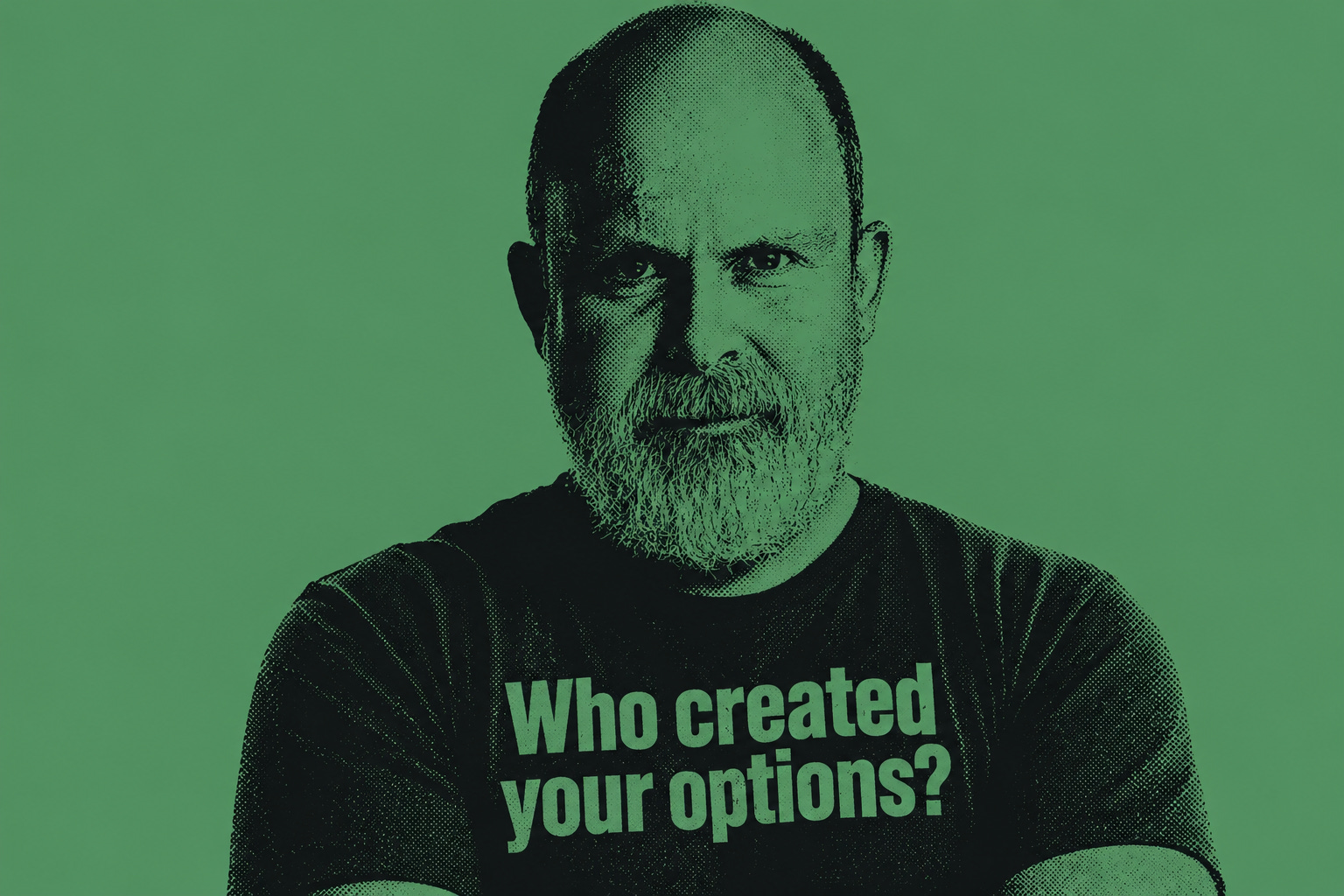
The strange thing is that we rarely apply the same doubt to ourselves. When it comes to our own decisions, we feel certain. The reaction is justified. The opinion is ours. The choice was made freely.
But what if the choice was designed before you made it?
In the Matrix, Morpheus offers Neo two pills. Red or blue. It is presented as the moment of ultimate freedom — your life, your decision. Except Neo didn’t choose to be in that room. He didn’t choose who offered the pills, or that there would be only two. The frame was set before the choice began.
One of the film’s characters states it plainly:
Choice is an illusion created between those with power and those without.
This is not a new observation. In the second century, Gnostic writers described something they called the bond of forgetfulness.
They wrote about forces that shape what a person pays attention to.
And through attention, they shape what a person thinks. And through thought, what a person does.
The language is mythological because that was the language available to them. But the mechanism they were describing is the same one Cambridge Analytica called behavioral microtargeting in 2016.
Shape the environment. Let the automatic responses do the rest.
I wrote about this recently. About how manipulation works from the outside, how a perception becomes a story, a story becomes an identity, and an identity becomes a loop.
What I didn’t see then was the same mechanism running inside me.
When I feel the impulse to help someone who isn’t asking for help, to show a perspective they didn’t request, that impulse feels like care. It feels like mine.
But if my reaction is automatic, I’m not really choosing. I’m following a pattern. And a pattern can be anticipated.
Someone who knows how I tend to react can design the situation so that I arrive at exactly the response they needed — believing I decided freely.
That’s the frame inside the frame. Not just the world shaping our choices. But our own automatic reactions become the raw material for someone else’s architecture.
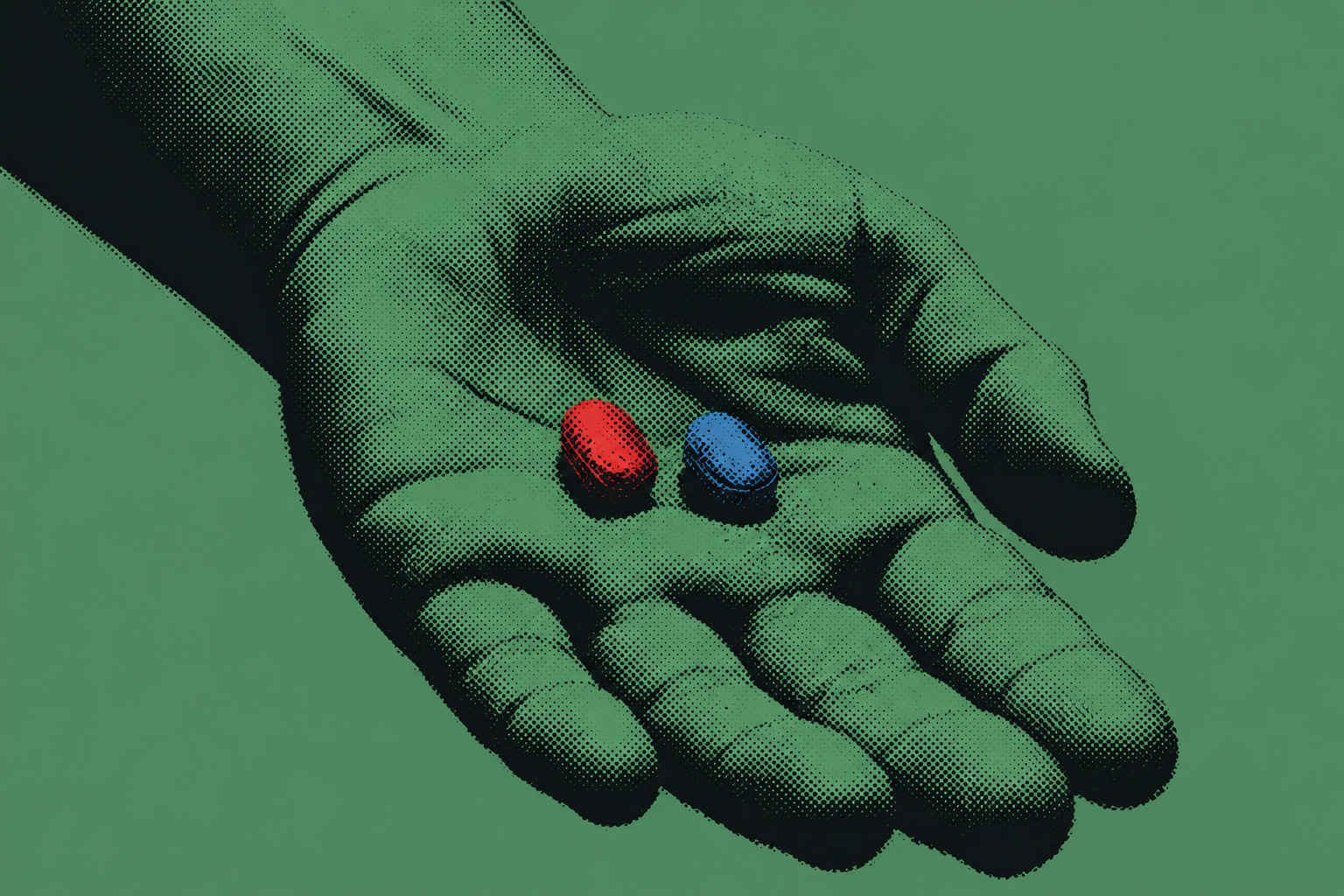
We often experience political campaigns, social media algorithms, or negotiating tactics as external pressures. Sometimes as traps. But they are more precisely manufactured environments, designed to produce predictable reactions from people whose patterns are already known.
They don’t need to force anything. They just need to know how you tend to react. Then they build the room around that.
The algorithm feeds you what keeps you scrolling.
The political campaign names an enemy that matches your existing fear.
The negotiator creates urgency that makes your options feel limited.
None of it feels like a cage. It feels like reality.
So what does awareness actually change?
Not everything. The frame is still there. The algorithm still runs. The automatic reactions don’t disappear because you’ve named them.
In the Matrix, when Neo finally understands the architecture of his own life, his immediate response is rage. Then the desperate need to save Trinity. The Architect watches without surprise. That reaction was the plan.
Seeing the mechanism didn’t free Neo in that moment. His automatic response was still captured.
But there is something smaller and more honest available. A brief gap between the stimulus and the response. Enough to ask — is this reaction mine?
Or am I choosing from a menu someone else designed?
That question is enough. Not as a solution. As a practice.
The next time you feel certain about a reaction, certain enough to defend it, certain enough to act on it, it might be worth pausing for just a moment, not to doubt yourself. But to ask one simple question:
Who created your options?
I wish you a lovely day,
Jose.
That's genuinely beautiful! It is hinting at what has become the next (and maybe last?) phase of my work: a paradigm shift.
Once there is a paradigm shift on how reality is created, you don't have to figure out or learn how to change your behavior, decisions and options.
Back in the times when people believed the earth was flat, there were loads of options on how to prevent ships from falling off the cliff.
Once it became clear, that the earth is round, all these options were obsolete. Automatically.
That's what I'm working on. I'm pointing to a paradigm shift on how reality is created. No techniques. Just the seeing is enough.